Authors: Lola Avery & Serene Haddad
Graphics: Tessie Ulman
For two decades, Victoria’s Secret didn’t just sell lingerie; it defined it. Then came a $1.6 billion sales slide that exposed how fragile that dominance really was. Born to squash the awkwardness of shopping for intimates, the brand’s central thesis hinges upon creating an empowering and uplifting environment for both men and women, though the company is best known for the world-famous “Victoria’s Secret Fashion Show.”
Widely considered the world’s most famous commercial fashion show, the Victoria’s Secret runway has hosted the biggest names in modeling and music, strutting in elaborate intimates and grandiose angel wings, with each show costing $10 million to $22 million to produce, making it less a fashion show than the most expensive annual advertisement in the industry.
The Victoria’s Secret Fashion Show grew into a cultural phenomenon, giving rise to the “Angels,” an elite group of supermodels signed to exclusive contracts as the faces of the brand. The show drew over 12 million viewers in 2001, but viewership fell to a record low of 3.3 million in 2018, a loss of nearly three-quarters of its audience. By 2019, the show was canceled.
The decline of the Victoria’s Secret Fashion Show (VSFS) tracked closely with the company’s finances, with annual sales falling from an all-time peak of $7.8 billion in 2016 to a low of $6.18 billion in 2023. In just two years, market share collapsed from 33% to 24%, meaning the brand lost more than a quarter of its hold on the category, as the company struggled to compete in a market that shifted from push-up bras and glamour to sports bras and athleisure. Worse, Victoria’s Secret had tied its fate to the traditional indoor shopping mall format, a format that saw 14,610 store closures nationwide between 2016 and 2025.
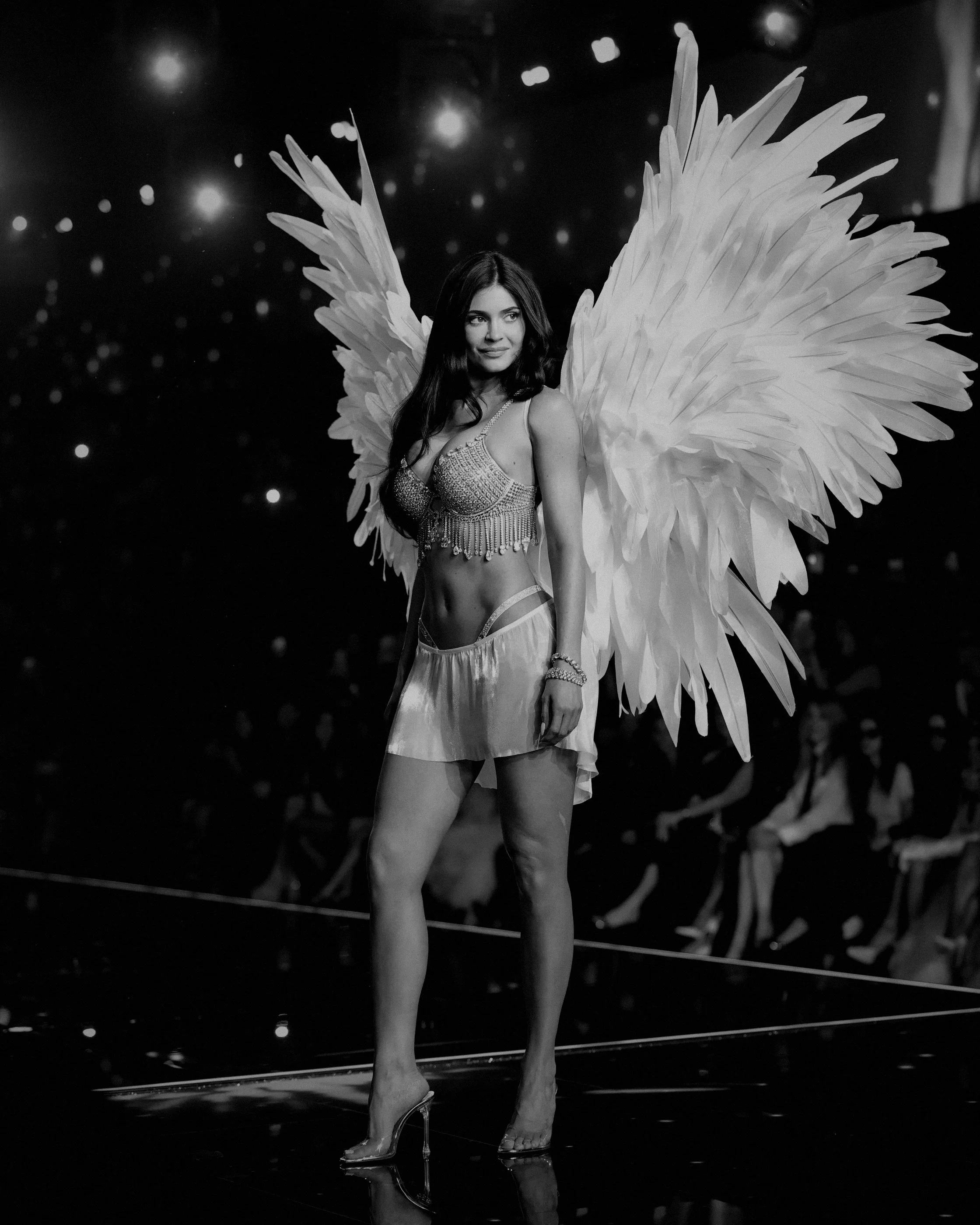
So why would a struggling brand revive a show built on the very beauty standards consumers had rejected? Because spectacle still sells. In 2024, Victoria’s Secret announced the show’s return. The return of the internationally renowned event was expected to generate a 10% year-over-year net sales increase, and fans leapt at the opportunity to see the classic Angels and new faces take the runway.
The comeback divided fans, both over the brand’s push for a more inclusive beauty standard and over the wave of celebrities and influencers invited to walk. Kylie Jenner’s reveal as the face of this year’s $50 million Fantasy Bra embodied both debates: a celebrity, not an Angel, crowned with the brand’s most exclusive symbol of glamour.
Fans were outraged to learn that many of their favorite classic Angels, like Romee Strijd and Stella Maxwell, were not featured in the 2026 VSFS, despite less popular influencers and celebrities being offered invitations. The likely answer is economics: the extension of invitations to TikTok stars and social media influencers carries a far smaller price tag while simultaneously generating immeasurable publicity for the show.
Speaking of publicity, Victoria’s Secret implemented a new marketing strategy for this year's Victoria’s Secret Fashion Show that’s worth noting. For the first time in the brand's history, an open casting was held nationwide in search of a new Angel. “Angels Among Us,” a six-part YouTube series, documented the process of narrowing down over 100,000 unsigned models to a final winner who earned her wings on October 18th along with an IMG Models contract. In total, the series amassed 17.8 million views and got people buzzing with suspense for the big reveal. Even though the quality of VSFS has suffered from an apparent decline in budget, it is clear the brand is implementing new tactics via social media to compensate, proving that in 2026, buzz is worth more than budget.
