Authors: Kate Rodgers, Kate Davis, & Katie Kossow
Graphics: Sophia Landers
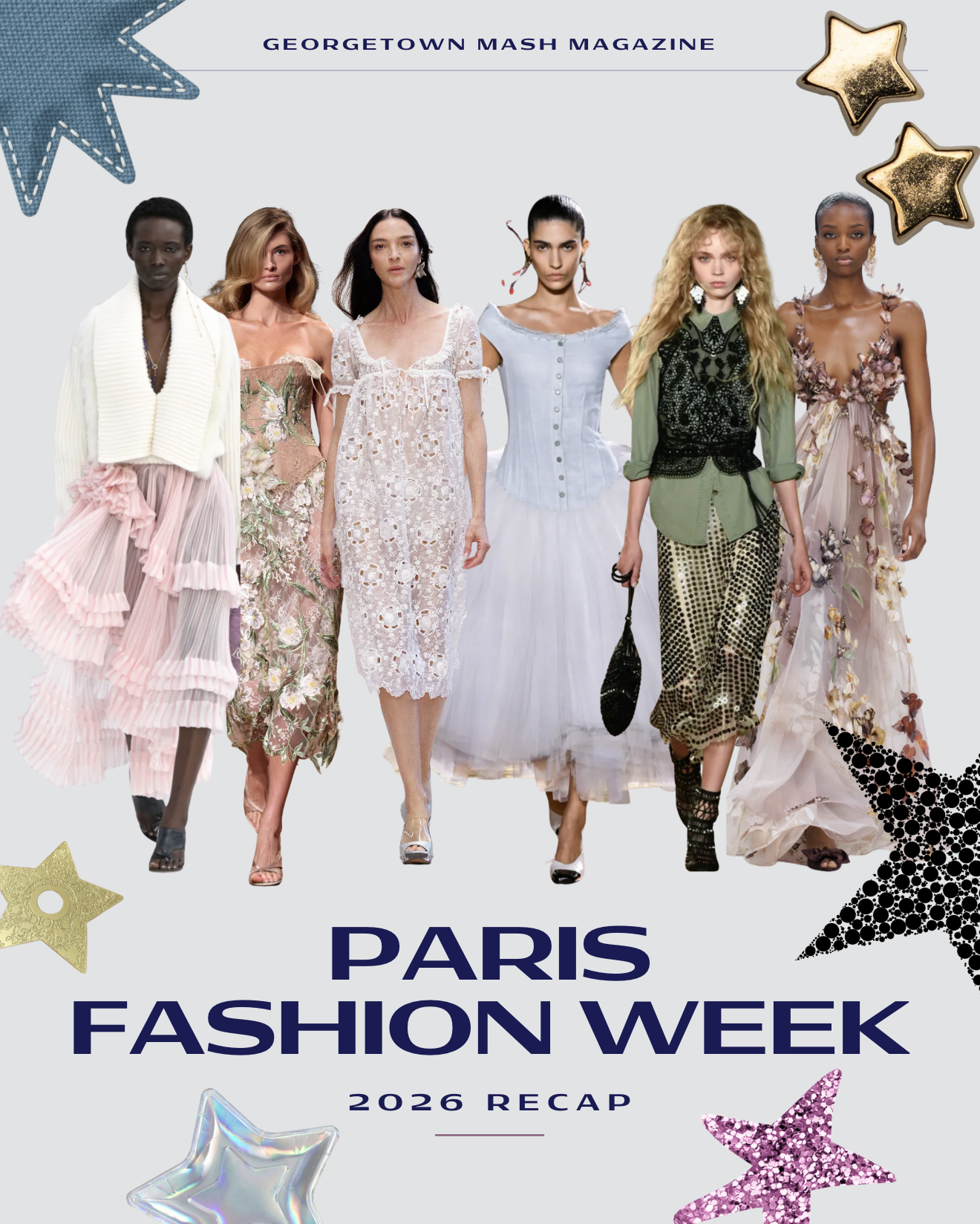
Paris fashion week is a semi-annual series of designer runway shows held in Paris, France. The nine day event serves as the finale to the global “Big Four” fashion weeks featuring New York, London, and Milan.
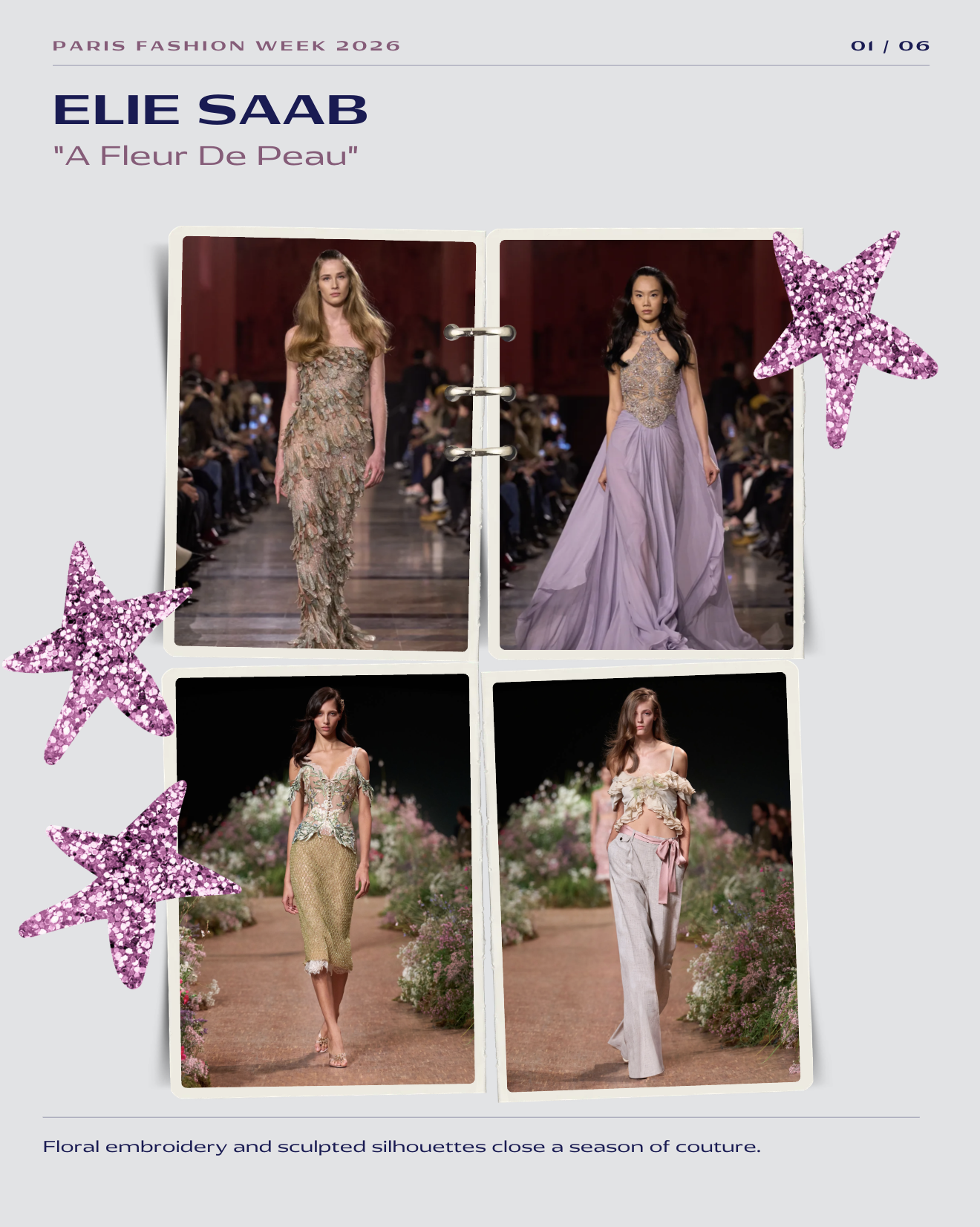
Inspired by Jean Harlow and 1930s Hollywood, Elie Saab’s Spring/Summer 2027 collection, “A Fleur De Peau,” meaning “close to the skin,” combined old Hollywood glamour with a sense of modern femininity. Wildflower covered mounds lined the runway, creating a dreamlike atmosphere as models walked in lingerie-inspired dresses featuring bustiers, bralettes, and delicate straps. Intricate embroidery, beading, and floral embellishments complimented the collections soft silhouettes while maintaining the house’s signature sophistication.
The collection drew heavily from Jean Harlow, a 1930s Hollywood icon known for her effortless glamour and simple sensuality. With her signature satin gowns and bias-cut silhouettes, Harlow demonstrated how simplicity could be captivating. Saab reimagined this aesthetic for the contemporary woman, combining the elegance of the past with an intimate approach to dressing.
However, the collection's reference to 1930s Hollywood suggests a cultural parallel between the Great Depression and today’s economic uncertainty. During the Depression, Hollywood offered audiences an escape from the financial hardships of everyday life, with stars like Harlow embodying a glamour so many desired. Nearly a century later, as economic uncertainty and global conflict once again dominate headlines, Saab’s return to this era evokes a similar desire for escapism. Rather than directly confronting these anxieties of rising costs and international conflict, the collection offers a romantic alternative with delicate fabrics and floral details.
Simultaneously, the collection's emphasis on lingerie styles speaks to an evolving shift in how femininity is expressed through clothing. By incorporating corsets and sheer fabrics in her pieces, Saab presents traditionally intimate designs as reclamations of the female body rather than catered towards an external and sexualized gaze.
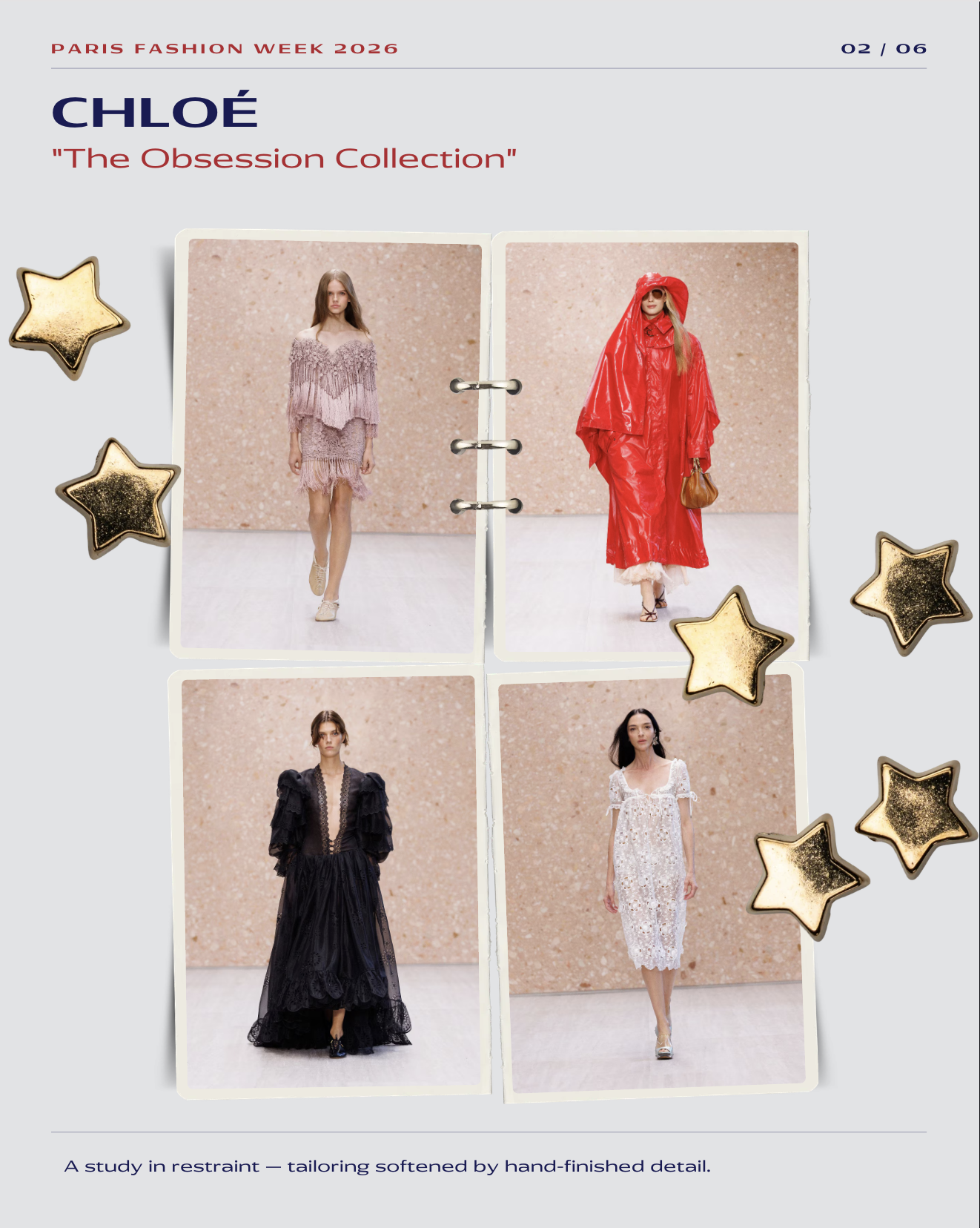
Titled, “The Obsession Collection,” Chemena Kamali’s Spring/Summer 2027 ready-to-wear offering for Chloe blended Western frontier symbols with delicate folk styling. Leading the House since 2023, Kamali reinvented bohemian femininity by contrasting nostalgic, historical influences with contemporary pieces. Models walked the runway in mainly black and white color palettes, but with dramatic pops of bright reds and pinks.
The collection drew heavily from Chloe’s archives, most notably integrating 1960s floral embroidery in conversation with designs popularized during Phoebe Philo’s tenure at Chloe. By revisiting these eras, Kamali demonstrated that historical pieces can be adapted into a modern wardrobe. The looks also played with exaggerated proportions, featuring oversized sleeves and large hats. In doing so, Kamali reimagined traditional bohemian style for the contemporary woman with a forward looking perspective. This collection also paid homage to Karl Lagerfeld’s tenure at the house, particularly his 1972 white suit, a design that showed how structure and fluidity could redefine the feminine wardrobe, especially during a time where the line between masculine and feminine was rarely crossed.
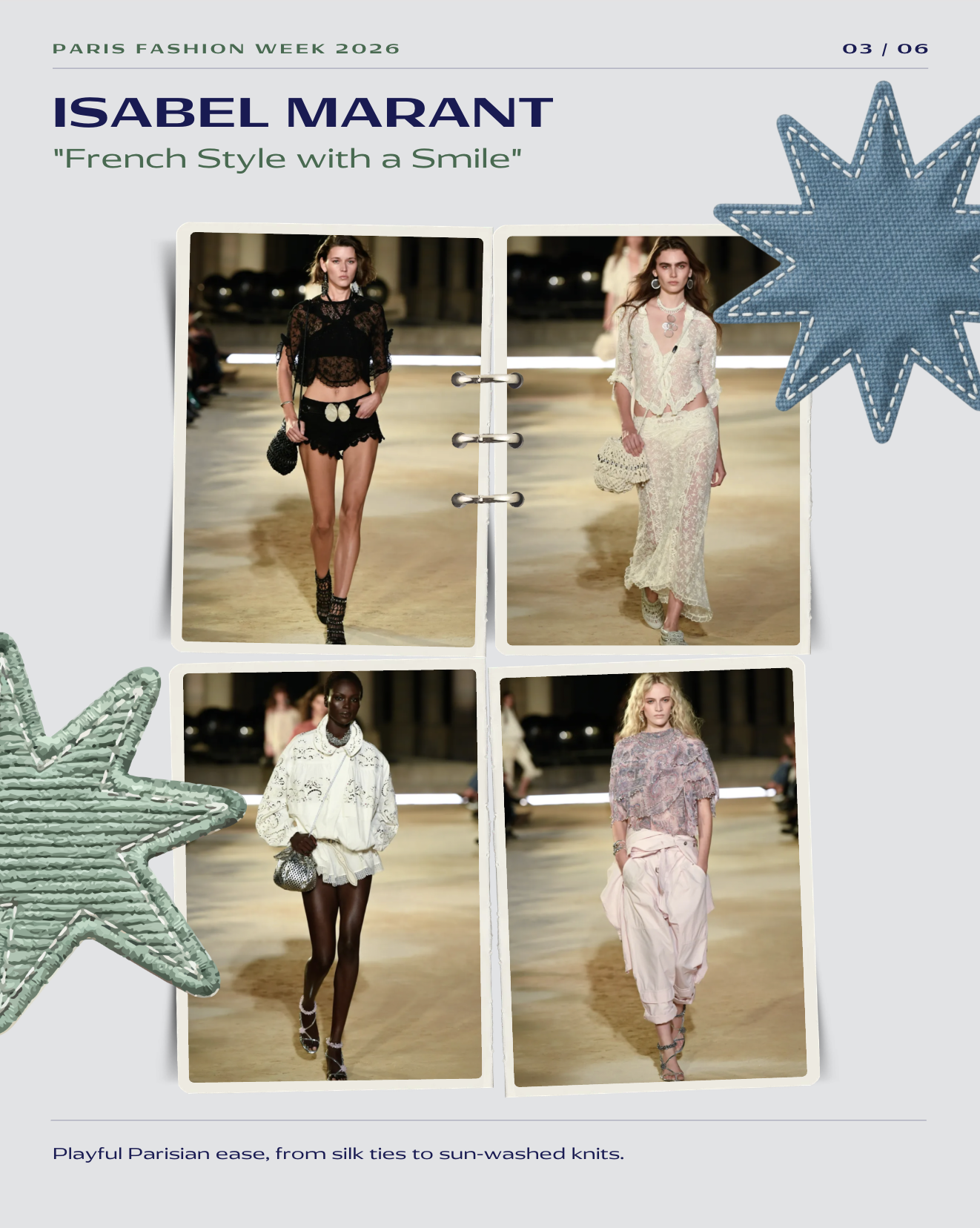
If 2010's Coachella went to finishing school in Paris, it would probably look like Isabel Marant’s Spring 2027 collection featuring macramé, paisley, beads and ponchos: all grown-up and effortlessly chic. Isabel Marant calls its aesthetic “French Style with a Smile”, and this season—inspired by the intersection of hazy California sunshine and southern European romance—that smile got a little dreamier.
Traditionally, Isabel Marant’s collections have followed a tomboy street-chic vibe, but the pieces displayed on the runway during Paris Fashion Week emanate a softer, dreamier femininity. Vintage-inspired looks capture this retro-romantic mood through billowy blouses printed with paisley, skirts embellished by scintillating sequins, and belts adorned with seashells and butterfly motifs. Though these garments exude a bohemian, effortlessly chic Parisian style, they maintain the rebellious attitude characteristic of the house: models strutted down the runway wearing open weave mesh booties which were popular during the 2000s and drew inspiration from punk influences of the 80s and 90s—giving them an edge of provocativeness. Slouchy crochet bags hung effortlessly from the models’ shoulders as they walked the runway—rejecting the rigidity of high fashion, and proposing something more practical. Even the bold, chunky earrings signaled defiance. Their geometric designs nodded to Art Deco, a movement rooted in rebellion against the flowing, organic lines of Art Nouveau. In this way, rebellion is intrinsic to the Isabel Marant label.
The collection was designed by Kim Bekker, who took over as the house’s sole creative director last fall after years as Isabel Marant’s second-in-command. And the ultimate Marant woman? Isabel Marant herself. Thus, it’s no easy task for an outsider to be handed the baton and charged with preserving the label’s singular, instantly recognizable spirit.
The succession itself is a feminist statement. Isabel Marant built a house around a woman’s own wardrobe instincts, and now another woman is carrying that vision forward. The Marant girl is elegant without being fussy, and romantic without being fragile. As Vogue put it, she is “the French girl with the just-rolled-out-of-bed, can’t-be-bothered look. She pulls on last night’s clothes—slouchy tee, gray jeans. Fingers through the hair, a touch of makeup, and she goes out. Yet she looks smashing.” Where much of fashion still equates femininity with polish and perfection, Marant offers a more radical vision: a woman who is entirely unbothered, and completely her own.
Isabel Marant is a growing company, with Jing Daily reporting revenue of roughly €300 million in 2022, and a goal of €500 million by 2026. Leaning into romance, pastels, and flowy silhouettes broadens the consumer appeal to shoppers who want a more feminine look without losing the label’s signature edge. The brand’s approachable personality is a distinct asset too: where many luxury houses keep customers at arm’s length, Isabel Marant invites customers in—and that kind of accessible cool is beneficial for an ambitiously growing company.
In the end, Bekker nailed the “French style with a smile” essence. It’s safe to say the collection is the epitome of “cool girl,” and we are smiling at the ingenuity of its pieces.
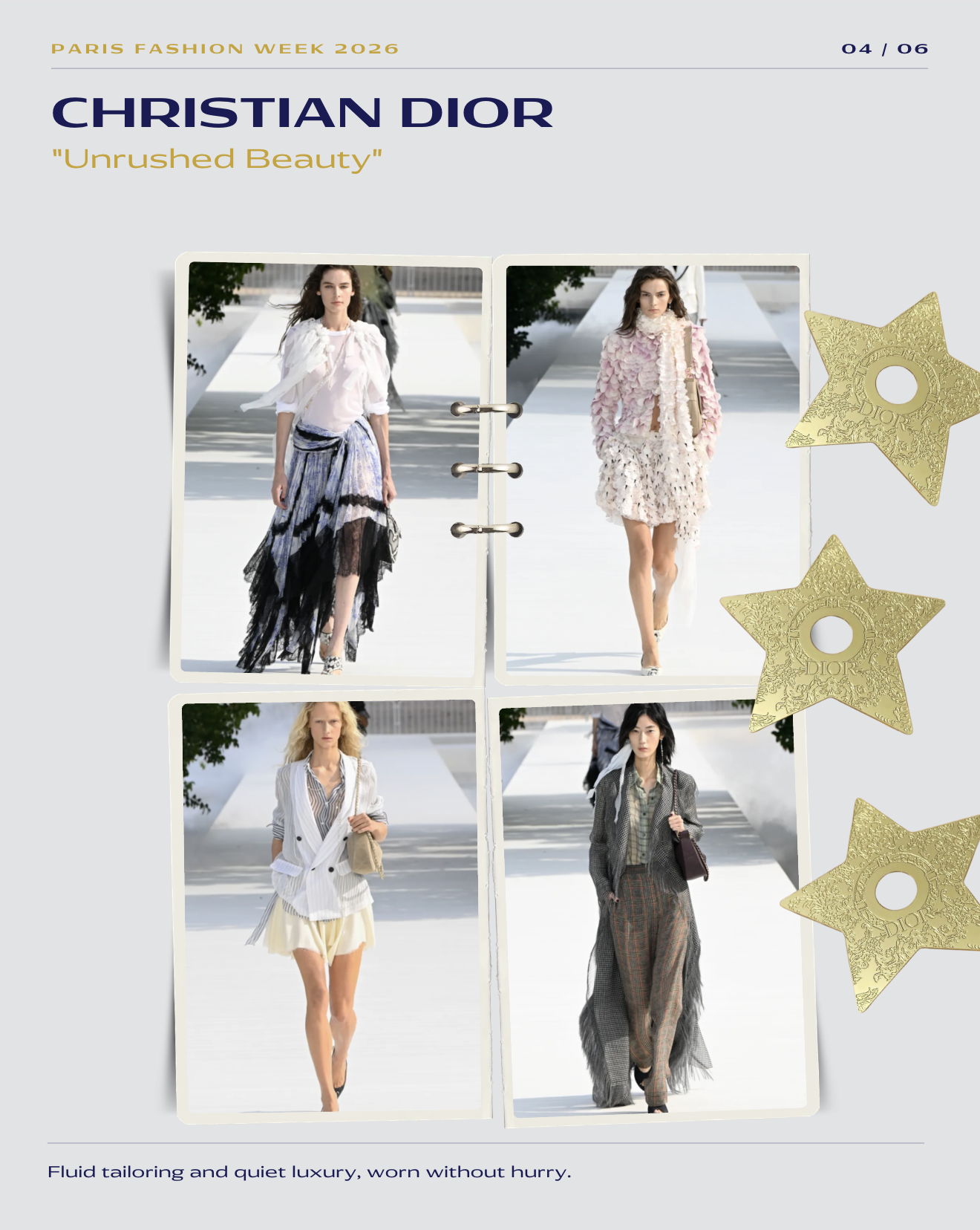
With Dior’s sales decreasing over the past two years, the brand needed a win. And Jonathan Anderson was just the person to do it. As the newly appointed creative director for both menswear and womenswear, Anderson stepped up to the runway rather than the plate, leading Dior under a single creative vision and taking on the enormously daunting task of improving the multi-billion dollar brand’s performance.
Set on a pond with verdant trees flanking the runway and a mysterious blanket of fog dancing through the air, the clothes from Anderson’s collection shared the same hazy quality as the mist they were enveloped in. Each piece drew from nature, where everything is in perpetual motion and fluctuation; gossamer layers of airy ivory chiffon drifted in the air while waterfall skirts, structured jackets, and asymmetrical earrings were adorned with cascading tiers of hand-painted flower petals. Meanwhile, other pieces played with light: sheer fabrics lent the looks a translucent quality, while metallic features reflected it back directly.
The inspiration behind it all was just as patient as the clothes themselves. Guests of the show received two wénwán walnuts as their invitation; small Chinese walnuts that have been rolled in the hands of many since the Han dynasty as a form of meditation. Over time, rubbing the walnuts together slowly polishes them into a deep red, jade-like finish—a process that can take decades. For Anderson, the walnut became a metaphor for how beauty cannot be rushed. Reflecting on tradition, he mentioned it reminded him how “we can find knowledge and preciousness in nature.” That slow unfolding extends to the clothes in his collection; Anderson wanted to showcase a soft effect, and explored what tailoring would look like if reimagined as flou—the couture term for fluid, light-weight fabric. The result is ethereal garments that seem to leave a trace of themselves as they move. The set followed the same logic: the trees from the runway will be replanted in the Tuileries gardens where they will continue growing long after the show concludes.
However, the most striking element of the collection is its contrast between form and freedom. Anderson reimagined the softer expression of harsher shapes, pairing stiff suit jackets with open flowing shirts or dainty skirts so the elements work in accord, rather than in juxtaposition. The contrast he creates exudes a sense of ease that resembles the effortless harmony found in nature. For a brand like Dior that is typically associated with elegance, discipline, luxury, and haute couture, Anderson’s reenvisioning is nothing short of ground-breaking. Historically, Dior’s collections in Paris Fashion Week have been steeped in the past, shaped by sartorial memory and the creativity of former centuries. Under Maria Grazia Chiuri, the house leaned into modern reinterpretations of “Marie Antoinette-esque” pieces with an aristocratic grandeur that felt more like a costume archive than a living wardrobe. Even the florals—which return in Anderson’s collection—were arranged to adorn the clothes rather than move with them. In this season’s collection, silhouettes still carry Dior’s classic aristocratic feel, but are draped with a relaxed attitude to shed their rigidity. This new vision for Dior perhaps reflects a strategic plan to break away from the ornate formula that Dior’s customers had come to expect, and move towards somewhat of a reinvention that honors the house's heritage while redefining it simultaneously.
As it turns out, Anderson’s boldest move was leaning into patience amidst an industry of noise and urgency.
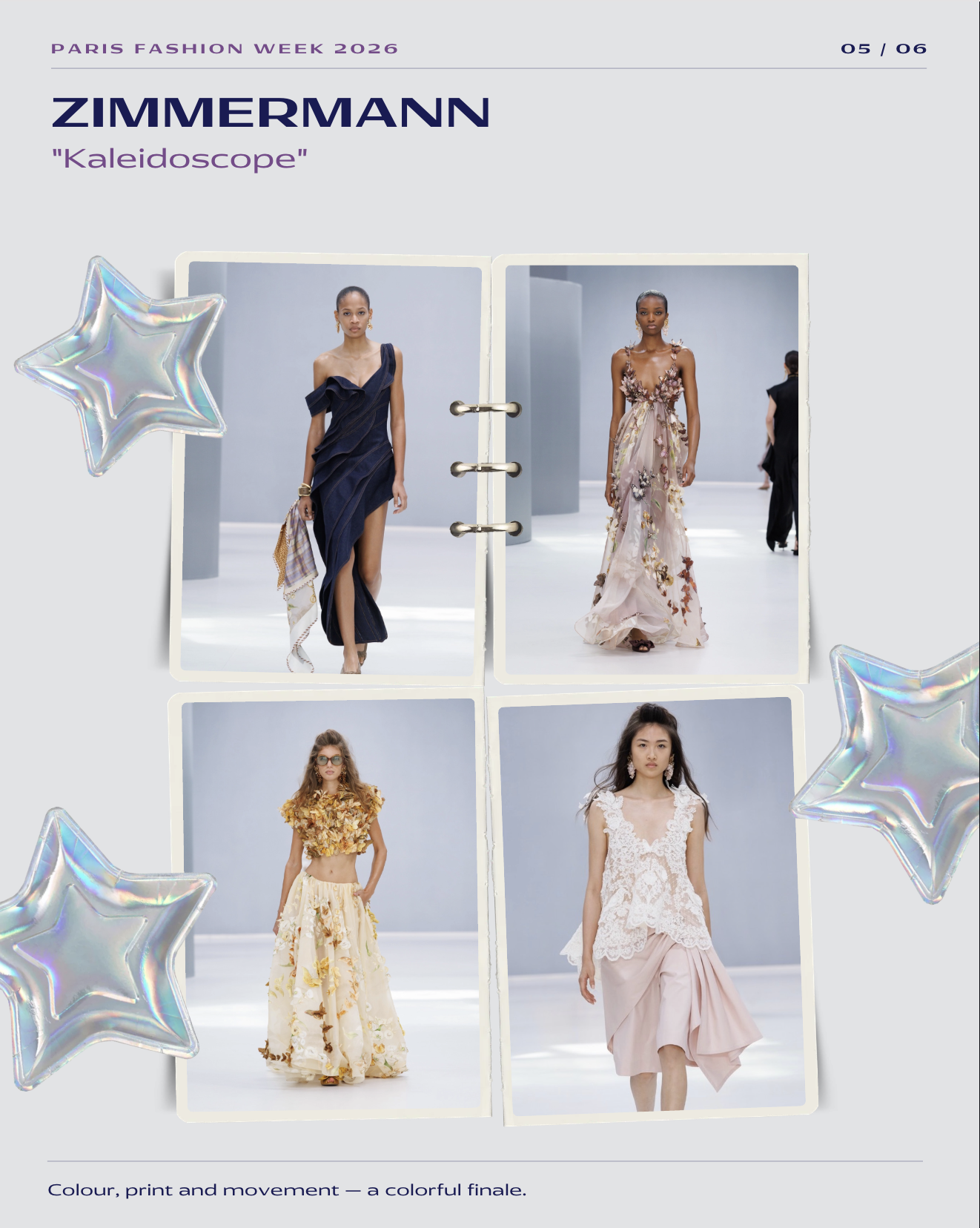
Zimmermann’s only constant is its continuous evolution. Their Spring 2027 collection is no exception.The brand aptly named the line “Kaleidoscope,” as the collection includes complex collections of colors, textures, and cascading silhouettes that featured a gradation of butterflies. Creative director and co-founder Nicky Zimmermann drew inspiration from 19th-century Australian scientific illustrators Harriet and Helena Scott. After viewing their illustrations, Zimmermann revealed, “We loved the idea of combining the strength of butterflies’ movement and the power of their transformation.” The fusion of metamorphic strength and sheer femininity narrates the line as a statement of power in addition to beauty. This idea suits a house founded, owned, and creatively directed by women, a distinction that still stands out at the top of the luxury industry.
Cofounded in 1991 by sisters Nicky and Simone Zimmermann, the brand built its reputation on elaborate original patterns, structured swimwear, and intricate details. What began as a resort- and swimwear-focused brand created out of their parents’ garage evolved into a staple luxury ready-to-wear brand. The sisters’ ambition and drive propelled them to the renowned status they hold today, especially after joining the Fédération de la Haute Couture et de la Mode (the French fashion body which includes Dior and Chanel). This growth extends well beyond the runway, as Zimmermann now operates roughly 100 of its own retail locations worldwide. Notably, the locations have often been centered in resort destinations, which keeps the brand tied to its beachwear roots. However, in the past two years they have opened retail locations in more commercial areas, such as Hong Kong, Beijing, Shanghai, London, and Chicago. Through both their retail expansion and experimental designs, Zimmermann is clearly signalling to the market that their brand is more than a resort label.
Throughout the brand’s exponential growth, its designs have remained rooted in intricate details. “Kaleidoscope” experimented with new silhouettes and drapings, yet their trademark intricacy shone through the delicate floral details. Nicky Zimmermann told Elle Magazine regarding the collection: “It was a very experimental collection for us … we were looking at ways to get new sorts of movement in the fabric.” Zimmermann’s willingness to evolve while simultaneously preserving the details that make their designs so unique is exactly why they are continuing to thrive in today’s market.
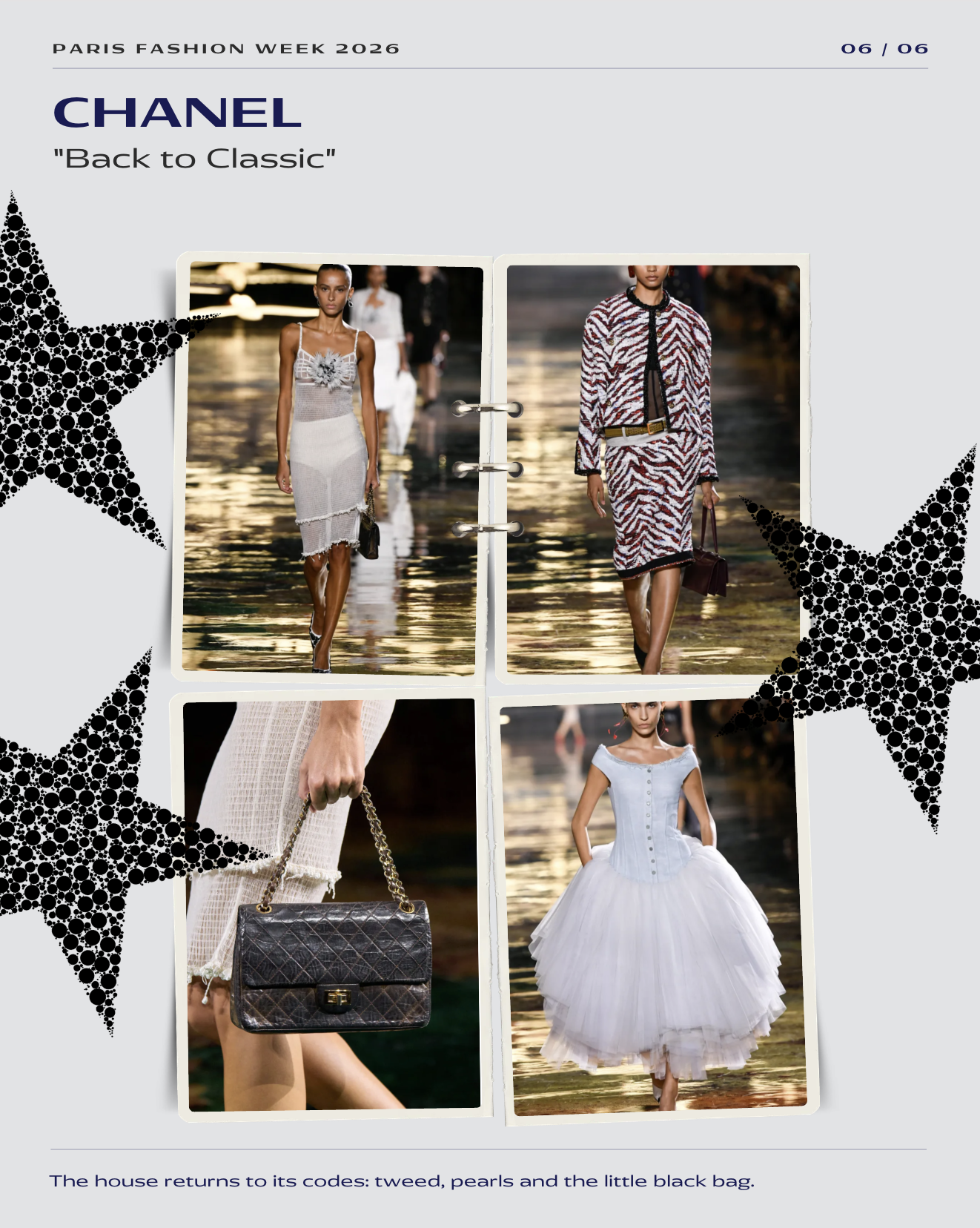
Only a year into his role as creative director, Matthieu Blazy continues to gain trust with a legacy as large as Chanel’s. In the Spring 2027 collection, Blazy proved himself worthy of his new role. Through homage to Coco Chanel’s original designs while simultaneously leaving room for personality, Blazy has begun the revival of a classic house.
The show opened with a sheer, tight midi dress embellished with a central floral detail, and the model notably held an archival 2.55 bag straight from Coco Chanel’s own collection. Opening the show with one of the brand’s most recognizable items, worn with age, embeds symbolism that is hard to miss. The 2.55 is where much of Chanel’s modern identity began, and it was the first thing on the runway at the start of a new creative chapter. These themes stay prevalent throughout the entire collection. The lightness and movement of the materials (like the ballerina tulle and sheer knit) paired with the classics (such as the 2.55 bag or tweed jackets) convey the message of the brand itself: finding autonomy through self-expression while preserving timeless, elegant artisanship.
Blazy’s thematic play is a smart read for the modern climate. Today, no one wants to conform; uniqueness has become the trend. Although the classic Chanel tweed pantsuits are still timelessly chic, excitement is what luxury houses now depend on. This excitement is undoubtedly good business; Chanel saw its first sales decline since the pandemic in 2024, then returned to growth in 2025. Since then, the house has raised prices on its core classics by just under 4% in April 2026, while leaving Blazy’s new styles at their existing prices, which lets demand for new pieces build. Blazy has managed to balance the reliable and desirable styles seamlessly, which will no doubt cause a raise in demand, and price, for his designs.
