Author: Dainan Wolfe
Graphics: Ploen Manopinives
By basic retail rules, the coffee shop tucked behind an obscure alleyway would be a considered hidden gem. Yet, on a Saturday afternoon, the line often extends out their accented red door. Above it hangs a forest-green sign adorned with a lowercase typeface spelling Flor. The Argentinian-inspired cafe fills daily with patrons and students coming in and out to eat and study.
Down the block, amid chain storefronts, the Capital One Cafe draws students, but never Flor’s crowd or media buzz.
Georgetown students spend hours on M Street. We love to shop—stores like J. Crew, COS, and Tuckernuck offering student discounts are proof of that. M Street features the same national names you’d find in any upscale shopping district in the country. Between the Capital One Café and the Starbucks on campus, students never have to walk far for something familiar. Yet family-run small businesses are still thriving. They aren’t just surviving beside the big brands; they’re often the places we choose first.
That loyalty says something about the Georgetown community. Many college campuses like to differentiate themselves from others, priding themselves on a niche character that sets them apart from every other school. At Georgetown, that sense of distinction lives in the small businesses, and students don’t just invent their love for them. Long before each new class arrives, Georgetown’s local spots are already woven into the neighborhood. Students don’t create that culture; they inherit it, and in time, they become part of it.
However, it's apparent that M Street tells a different story. Its storefronts belong to global chains, not the mom-and-pop shops students frequent. So in a neighborhood that sells us what we could buy anywhere, why do students keep choosing the local joint?
It wasn’t always this way. Georgetown’s commercial strips were once dominated by independent shops, until pricey national chains gradually crowded them out of M Street. As malls and nightlife took over, the small storefronts on Wisconsin Ave began to change as well, with names like Gap and Banana Republic moving in. The Washington Post even ran a story in 2009 on the disappearing stores and the anxiety around Georgetown’s retailers.
Yet, even as chains began to dominate, the community never fully gave in. The neighborhood has been a historic district since 1950, and the board reviews building exteriors to protect Georgetown's quintessential character: when Apple wanted to open on M Street, the company proposed countless designs, but the board rejected them repeatedly as too contemporary for the neighborhood. Even the facade of the Joe and the Juice (set to open soon) needed federal approval.
Georgetown’s message has stayed the same for decades: name brands can fill the storefronts, but the neighborhood’s iconic character comes first. From the town's review board to the long line at Flor, Georgetown falls in love with and keeps choosing its unique, exclusive charm. The name brands are a convenient accessory to everyday life, rather than the definition of Georgetown’s retail character.
Search “where to eat in Georgetown” or “Georgetown shopping” on TikTok, and the results rarely feature the big brands lining M Street. Instead, they’re full of “come with me to this hidden gem” videos, tagged #smallbusiness. Even online, the Georgetown that people share and celebrate isn’t the one built by chains.
On parents' weekend, students don’t make reservations at the chain restaurants they could find back home. They make them wait at least half an hour—maybe more— in the ever-present line at La Bonne Vache, squeeze around a community table at Flor, or walk them to Boulangerie Christophe on a Sunday morning. When friends visit from other schools, the routine is the same. The places students talk about, take visitors to, and post about are almost always small businesses.
When Pop Up Bagels arrived, students lined up outside the doors, budgeting an hour of their time to get into the store. Yet now, the line is no longer stretched down Wisconsin; Pop Up was the fad of the month, much like similar companies, but its popularity diminished as the trend cycle turned.
Trends fade; Georgetown students' loyalty doesn’t. Look at Wisemiller’s Grocery & Deli. It never needed a viral moment to matter here; it simply became part of the student routine. It’s where students grab lunch between classes, dash in between running from Walsh to the ICC, and where staff knows regulars' orders by heart. The bagel craze was only a preview. A new wave of chains is about to test Georgetown’s loyalty again: internet-popular Joe & the Juice and Go Greek.
The newfound competition to local legend Thomas Sweet and newer, DMV local Puree raises a real question: will students trade the shop that’s been here for years for the one that’s trending on their feeds? Will Puree get the chance to become a Georgetown staple before a global brand moves in down the street? And if the smaller spots lose their regulars, will anyone mind?
One marker of how the froyo and juice market may fluctuate is past patterns of longevity. The neighborhood reveals that chains win openings, but local spots win graduation cycles. Take Thomas Sweet. For more than four decades, it has been Georgetown’s go-to for ice cream, and it’s the brand’s only DC location. Its line routinely trails out the door onto Wisconsin Avenue, filled with tourists and Georgetown customers, all there for its 63 house-made flavors and signature blend-ins. If you're there often enough, you might even see the Clintons or the Obamas. Plenty of trendier dessert spots have since arrived, including Levain, yet none has students lining up outside at 10 PM on a Monday night the way T Sweet does. Sometimes, the sustained commitment the community gives to its eateries goes even further: paying to keep its favorites alive, as Georgetown did after the fire at La Bonne Vache.
Less than a month ago, an electrical fire destroyed La Bonne Vache, a family-owned French bistro, whose guaranteed wait and small antique tables drew crowds of students and locals alike. The fire forced the restaurant to close, and the community responded almost immediately: as of November 4th, the restaurant's GoFundMe to cover repairs and support its staff has raised $105,196.
No marketing budget can buy that kind of support. In just a few weeks, longtime residents, students, and loyal regulars raised six figures—not to rebuild the dining room, since insurance is covering the fire damage—but to keep the staff paid. For years, the waiters, bartenders and chefs took care of the Georgetown community, and now the town is making sure they're taken care of in return.
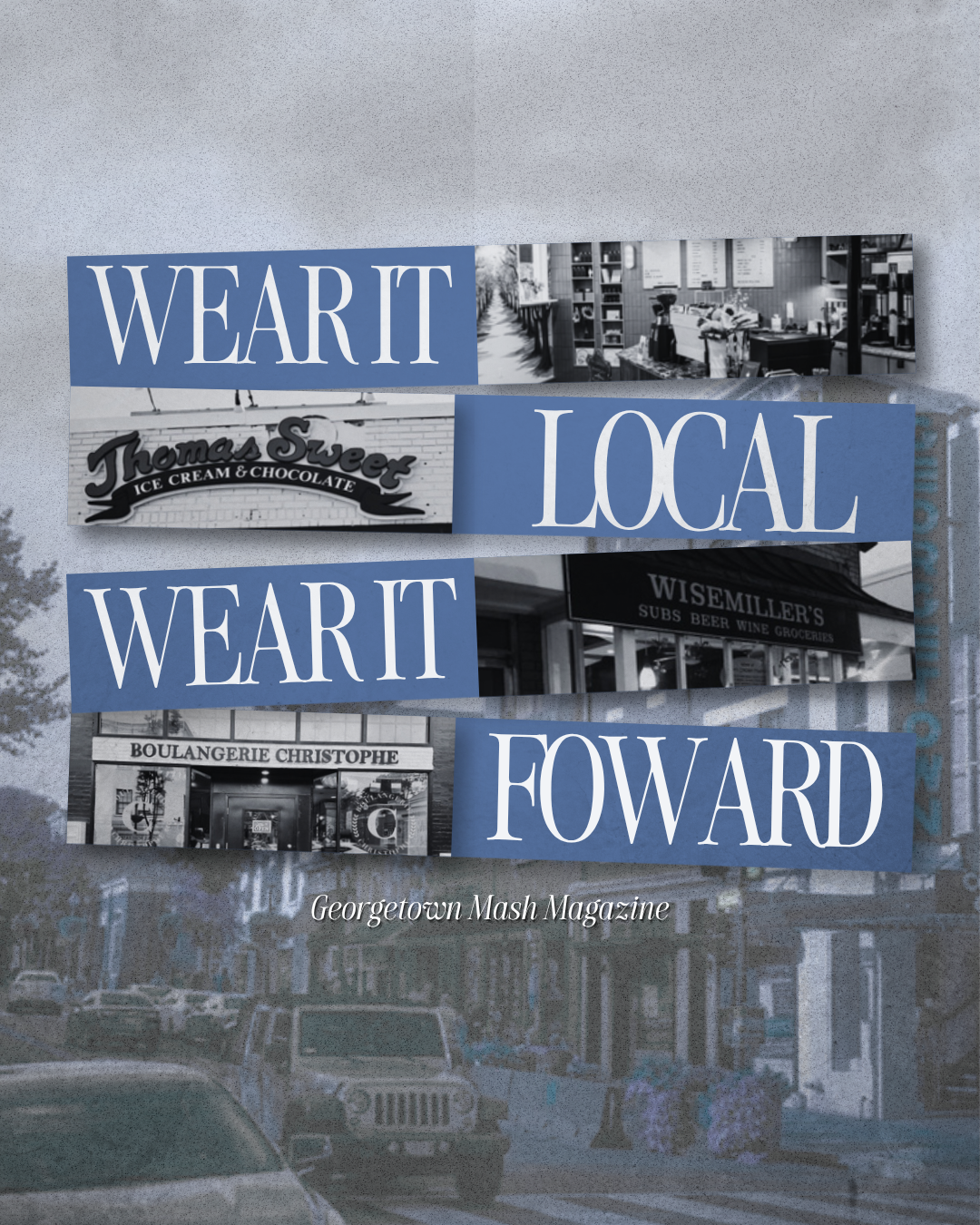
Supporting local businesses isn’t just something we can preach or write about; it’s something we can do. On Saturday, November 7, from 12 to 4 PM, MASH is partnering with Luv Rose Boutique for “Wear It Forward,” an event where attendees can shop 10% off Luv Rose apparel and merchandise, with 5% of total proceeds going to Dress for Success, a nonprofit that helps women achieve economic independence by providing professional attire and career support as they enter or return to the workforce. The event captures everything this piece is about: shopping local, giving back, and showing up for the places that make Georgetown the incredible community it is. Come look good, do good, and wear it forward.
